Unknown's avatar

The Next Phase – Active Duty

On January 28, 1968, I made the drive from Irving to Fort Sill to report for active duty and my three months of schooling. Upon arriving at the incoming processing offices, I received my new orders and my accommodation assignment. I was pleasantly surprised to find that the single officer billeting was in a fairly new and modern multi-story building. My room was nicely furnished with a private bath. It was like living in a nice hotel with a cafeteria. So far so good! The classroom for indoor instruction was also quite modern and well equipped. The instructor was a First Lieutenant from South Carolina, and a very good presenter.

After the first week I realized that I had found a course of instruction that I loved. I found the design and mechanics and hydraulics of artillery pieces, the variety of projectiles and fuses, and the materials and processes for aiming to be extremely interesting, and I actually enjoyed reading about it all! Aside from the frequent cold and wind of an Oklahoma winter, the outdoor instruction was also fascinating. Hands on operation of the howitzers was exciting and the process of adjusting the landing area of the rounds fired was challenging. I performed so well in all areas of instruction that my instructor suggested that I consider applying to the commandant for a position at the school.

When I had received my initial orders I had been surprised and somewhat perplexed at my assignment. Upon completion of Artillery school I was assigned to the Reception Station at the Army Infantry Training Center at Fort Bragg, North Carolina. I knew that training centers made use of Artillery, but what would I be doing at a reception station? And I had no further orders beyond that, meaning I could likely spend the remainder of my initial two years there. I was not pleased with such prospects, so I decided to make the application for an instructor-ship. After an interview with the commandant, he approved my application and made a formal request to the Pentagon for a change of orders. I couldn’t believe my ears when I was later informed that the request had been turned down! This was the first time that I questioned whether I wanted to be career military.

I didn’t have any prospects for marriage when I finished college, but I had already decided that I wouldn’t pursue it going into the Army, since the chances of going to Viet Nam loomed heavy. I wouldn’t risk not coming home alive and leaving a young widow. Linda and I had developed a strong relationship over the Fall and Winter, but we never discussed any type of commitment. After several weekend visits back to Irving to see her, I began to realize how much I cared for her and missed spending time together. When I saw that my two year commitment in the Army was going to be at Fort Bragg, I made the decision to pop the question. On my next visit, in late March, I asked her if she would consider being my wife. I’ll never forget the moment; I didn’t have a ring and I didn’t get on my knee. We were sitting on her sofa talking, and when I asked, I caught her completely by surprise. She had a shocked look on her face and her response was “you’ve got to be kidding!!” Then I was caught off guard, and I thought that I had blown it! I assured her that I wasn’t kidding, and then she said “yes”! I had probably never been so let down in one moment and then happy in the next in my life. We went shopping for a ring and made plans for a summer wedding, after I had gotten settled in North Carolina. I finished school at Fort Sill in late April and had a week of leave before reporting for duty at Fort Bragg. I spent several days in Irving before heading out across the South to the East Coast.

It was a long drive from Texas, and after stopping for the night near Atlanta, Georgia, I arrived at Fort Bragg by late morning. I was processed in and received my billeting assignment. It was nothing like Fort Sill; a small cramped room in an old barracks with well used furniture and a typical steel bunk bed. I determined that I would immediately begin a search for something – anything – better. The following morning I reported to the Reception Station and met Major Tompkins, the Commanding Officer. After a brief overview of what we did there, I was introduced to another Lieutenant who was in charge of the testing branch, where all the inductees and recruits were tested for aptitude before shipping off to the training center. I would be the assistant director of that branch. This was disappointment number two of my short time in the Army. I had just finished a comprehensive school in a complicated and technical combat branch, and now I was shuffling papers in an administrative role that had nothing to do with my chosen field. Another strike against career military…what a waste!!

After a couple of days of familiarization with the processes of testing, and meeting most of the personnel, I decided that I would make the best of the situation and began the search for alternate housing. I was lucky to quickly find out about three Lieutenants who were looking for a roommate to share a four bedroom house in Fayetteville, which was the town adjacent to Fort Bragg. That solved my housing conundrum and before long I would be looking for a house to rent with my forever roommate! The days went by slowly, even as I became more involved in the processes, and took on more responsibility. The testing branch was experimenting with a new program to expedite the test results using punch cards for a computer system. That was somewhat interesting, but the director was mostly involved with it. He was definitely on the “nerdy” side, so it was right up his alley. We didn’t have anything in common, so I spent my days doing my job and my evenings hanging out with my roommates, and counting the days until Linda would be joining me.

We had set our wedding date for June 22, so in late May I began to look for a place for us. In military towns there are always lots of houses being vacated because of personnel moving to new assignments, especially during war-time. I was able to find a nice furnished brick home in a suburban addition of Fayetteville, and quickly moved in. That made a huge improvement in my living conditions and I had an opportunity to get to know the next-door neighbors. We had a Staff Sergeant with the 82nd Airborne on one side and a Warrant Officer with the Army Air Corps on the other side. They both had young families, so it provided a homey feeling to the surroundings.

On June 15, I took two weeks leave and caught a plane to Dallas to prepare for our wedding. We had a busy few days getting our marriage license, spending time with friends and family, and packing all of Linda’s belongings into a U-Haul trailer before the big day. After the wedding we had our reception at my sister’s home, then started our honeymoon by driving to Shreveport, Louisiana. The following days were spent in New Orleans, Fort Walton Beach and Jacksonville, Florida, Savannah, Georgia and then to Fayetteville and our first home. It had been a bit of a whirlwind, but fabulous, time. I returned to work and Linda soon found a position with a local insurance company in Fayetteville.

The late 1960’s was a time of turmoil in the United States, largely due to the Viet Nam war. There were many people who were against the war, for various reasons, but young people were especially vocal. Some young men of draft age, 18 years and up, were even fleeing to Canada to escape induction into the Army. It was also the time of the “hippies” with their open lifestyles and “free love” mantra. Anti-war protests were common-place, particularly on college campuses. Marijuana and a few other drugs had become prevalent among many of the young, especially among the hippies. Fort Bragg, as one of the major Infantry training centers, was the receiving point for much of the East Coast and many of the draftees came from Philadelphia, Baltimore, Washington DC and surrounding areas. There were some very interesting characters among them. Busses full of draftees would arrive regularly throughout the day and night. Every evening, when the headquarters offices closed, an officer and a couple of enlisted men would man the office as a point of contact for any reason that might arise. This was known as OD duty, for Officer of the Day. There were nights, when I was serving as the OD, that I would be called to the receiving point, where the busses unloaded, because of an unruly draftee. They were generally loud, obnoxious, and belligerent characters who didn’t want to accept authority. Fortunately, they usually would quiet down when an officer with a side-arm showed up and threatened jail, or worse. It was always amazing how a shaved head and a uniform, where they all appeared the same, changed their demeanor. A few were truly hard core and caused enough trouble to actually end up in the brig.

In the Fall of 1968, we received notice that a U. S. Senator by the name of Ted Kennedy would be visiting Fort Bragg and touring the training center. That meant that he might come to the reception station. I couldn’t believe the amount of hoop-jumping that commenced in order to impress this potential visitor. Since there were many hardwood trees in our area, there were always lots of leaves on the ground. An order went out that due to the potential of the Senator’s visit, processing would be held to a minimum, so that most of the personnel could be involved in clearing the grounds of all the leaves and debris. Truckloads of leaves were taken to the dump. Then someone made the comment that the Senator was from Massachusetts, where the leaves were considered a thing of beauty in the Fall of the year. Trucks and personnel were then frantically dispatched to the dump to gather leaves and scatter them around the grounds!! I was dumb-founded…reason number three to doubt being career military!!

In late Fall, I was relieved of duties in the testing branch and assigned as Commanding Officer of one of the four companies of personnel assigned to the reception station. The previous Lieutenant had done a poor job of managing affairs and I was charged with getting things under control. I finally had a position that somewhat fit my training through the Cadet Corps and Artillery School! After a long talk with the First Sergeant, I found that the previous Lieutenant had let his ego badly affect the chain of command. I shared a large piece of “humble pie”, explained what I would like to see done, gave the First Sergeant my blessings, and watched things turn around. It was a good feeling.

On January 28,1969, I received my promotion to First Lieutenant, and shortly after was made Commander of one of the other personnel companies, for much the same reason. My first year of duty was done and I began thinking seriously about leaving the military when my two year obligation was complete. Springtime came, and in late April everything suddenly changed, when I was told to report to the reception station Executive Officer, a Major. I entered his office and there was no exchange of pleasantries; he sat at his desk, and with a quizzical look, simply said, “Lieutenant Nauck, you’ve been tapped for Viet Nam”. I don’t know how long it took for those words to soak in, or just what I replied, but he acknowledged that I had only nine months remaining in my tour and would have only seven months left when I arrived in country. It didn’t make any sense, because a combat tour was twelve months. Regardless, my orders were that I would have four weeks leave to move my family and get things in order to report to Fort Lewis, Washington by June 16. I wasn’t sure just how to tell Linda.

I can’t remember just how we dealt with the sudden news, but we wrapped things up in North Carolina, reserved an apartment back at the King’s Square, and headed back to Irving in mid May. We spent the next few weeks enjoying friends and family. We made a trip down to the Gulf of Mexico for a little family reunion at the beach. It seemed odd to be renewing friendships and relationships while also saying good-byes, that could be for the last time. We didn’t think about it that way, but the thought lingered in my mind. Linda had landed a job at her previous employer and she would be well taken care of by my sister and all the close friends that we still had in Irving, The morning of June16 arrived, and I had to say good-bye to my love, just six days before our first anniversary. As I entered the jet-way at Dallas Love Field and took my last look at Linda, I experienced the worst feeling of loneliness that I had ever felt. I wasn’t thinking that I wouldn’t come back, but seven months without even hearing her voice seemed like an eternity!

I arrived in Seattle by early afternoon, was shuttled to Fort Lewis, and began the processing for “over-seas combat duty”. I was finished by the next afternoon and flew out of Sea-Tac airport on the morning of June 18. The 737 plane filled with soldiers landed in Honolulu to refuel, and we were able to de-plane for an hour to stretch our legs. I was fascinated by the waiting area at the gate with no glass in the window openings and the view of Diamond Head in the distance. From there we would start the long flight to the Philippines where we would refuel, before completing the last leg to Cam Ranh Bay in the Republic of South Viet Nam.
Unknown's avatar

Texas A&M and the Military

I was seven years old when my oldest brother, Kurt, left home to start college at the Agricultural and Mechanical College of Texas, better known as Texas A&M. It was founded in 1872 as a military school, but due to the significant engineering and research facilities developed over the years, and the large number of World War II veterans, by the 1950’s it had a large civilian population of graduate and under-graduate students, many of whom were from foreign nations. However, the military Cadet Corps still comprised the majority of under-graduates, so there were uniformed cadets everywhere on the campus. As a young boy, I was fascinated by this presence.

On our first family trip to visit Kurt, in 1951, I remember traveling up Highway 6 from Navasota toward College Station, cresting a small hill and, across open prairie, having the first glimpse of the cluster of buildings in the distance. It was a sight that I would eagerly anticipate many times throughout my childhood. The main entrance to the campus was a long Live Oak lined boulevard with a mowed field

to the right and a golf course to the left. At the end was the iconic two-story colonnaded System Administration Building; a majestic sight. To the left were located twelve four-story dormitories, six on either side of “the Quad”, and the huge “Duncan Dining Hall” at the far end. We would occasionally buy meal tickets and eat with Kurt there, and I would be mesmerized watching the endless parade of cadet companies marching up the Quad to the hall; the sounds of various called out cadences reverberating off the buildings. I don’t think that I ever witnessed that without chills running up my spine.

We would make those trips several times each year until 1960, when my second brother, George, graduated from A&M. From that very first trip, I had set my mind firmly upon joining the tradition of becoming one of those cadets on that hallowed ground.

I was really immature when I graduated high school; probably more so than most of my peers. Years earlier I had blindly decided that I would become a Chemical Engineer like my brothers, and to excel to an even higher degree than they in the Cadet Corps. Throughout my school years, I never liked reading and studying, and only did what was necessary to achieve good grades. Fortunately, I had the innate intelligence to do very well. It wasn’t until around the eighth grade that I began to appreciate friends and activities that were a part of school. There were a few subjects that I enjoyed, but I never established good study habits and continued my disdain for reading. I also never considered what were my natural talents, or what I would be best suited to pursue educationally. All of my concentration was focused upon getting to Texas A&M and beginning my adventures as a cadet.

In September of 1963 I finally reached my goal of being enrolled as a “Fish” in the Cadet Corps. Freshmen were so called because fish live in the sea and thereby have the “lowest position on earth”. So began the process of indoctrination into the Corps. All Fish received a “buzz” hair cut, such as US Army inductees and recruits when entering basic training. This was the first part of the process of removing one’s identity and individualism. We were to become “one” with our peers. The mental and physical hazing that would follow throughout our Freshman year would create a level of cohesion and brotherhood that lasts a lifetime. The only people we could call by their first name were other Fish or an upperclassman with whom we had a special relationship, and invited us to do so. All others were called “Mister” so-and-so, and we were required to meet and remember upperclassmen. The entire process was intimidating and difficult, and quite a few could not handle the rigors of Fish life and chose to leave school, and continue their education elsewhere. Traditions at A&M were many and strong, and I fed on all of it, as hard as it was at times.

I devoted myself to fitting into the cadet life and what was expected of me. I soon found that I greatly enjoyed military drills and marching, intramural athletics, and classes of military science and engineering graphics; however, I had little interest in most classes and soon realized that I had no desire to study history and chemistry and physics and calculus. So, after semester break, I changed my major from Chemical Engineering to Undeclared. I had to have a major field of study in order to continue in school, and decided that Business Administration seemed the best of what was offered. I changed my major to Accounting the first semester of my Sophomore year and switched to Finance the next semester. Outside of the military, I really had no idea what I wanted to do with my life, so education was simply a means to an end, and I looked toward to pursuing a military career. It would turn out that my lack of attention to my studies would lead to scholastic grades that would prevent me from attaining some of the goals that I had set for my Cadet life.

At the end of my Freshman year I was awarded Best Drilled Freshman for my company and was selected to be Guidon Bearer for the company for my Sophomore year. The Guidon was the company flag that was carried on a staff in front of the company formation, beside the Commanding Officer. These were the crowning events of my Fish year as a cadet!

All of my life I had wanted to play sports, but I just didn’t seem to have those abilities, so I was always nothing more than a spectator. As Fish, we were all to be involved for our company in Freshman Intramural athletics. It turned out that one of my best friends in our company and I were very good at horseshoes and we went undefeated throughout the season. I also found that I greatly enjoyed singles handball and I excelled at it, going undefeated for the season. I played as much as I could, and there was a special feeling about winning when I happened to play an upperclassman!

My Freshman year was a scholastic disaster, but, between the military and sports, it couldn’t have been much better. I didn’t receive any awards for my athletic endeavors, but I had found a new level of confidence and self-esteem. I had also achieved something as a Cadet that my brothers had not done.

At the end of my Sophomore year I was awarded the Best Drilled Sophomore award and was selected to serve on Battalion Staff as Sergeant Major for my Junior year. Sergeant Major was the highest rank a Junior cadet could hold and was the logical step for Battalion Commander, a Lieutenant Colonel rank, as a Senior.

As my Junior year began, with all of the promise that it held, my grade point average once again reared it’s ugly head! I was short of qualifying for invitation to join the Ross Volunteer unit; a prestigious drill unit for Junior and Senior cadets. And, at the end of the year, I was by-passed for Battalion Commander because of my grades. I was, instead, offered a position as a Major on Brigade Staff. Although it was a good position, two more of my goals to rise in the Cadet Corps were crushed.

At least I had sufficient credits to receive Senior status and was able to order my Senior Ring and Boots. I served on Brigade Staff in the fall semester, but at semester break one of the members of the Corps Staff got married and had to live off campus. I was asked to take his place for the spring semester. I was over-joyed to be able to serve on the highest staff and promote to a Lieutenant Colonel position.

Regardless of my set-backs, I had a fabulous Cadet Corps experience and finished on a high note, and I had learned some valuable lessons along the way. Having dreams and goals and pursuing them is wonderful, but one must always be willing to put forth all of the effort required to achieve them. Otherwise, one will usually fall short.

Although I had accomplished so much during my college experience, there was one more instance in which I fell short. As I completed my Senior year I found that out of one hundred and thirty-five credit hours taken, I was six required hours short for graduation. I would have to return for one more semester to receive my diploma. My sights at the time were to be career military and I wasn’t really concerned with a “sheep-skin”, so in June of 1967 I applied for my US Army commission as a Second Lieutenant without degree and planned for the next phase of my life.

I had chosen Field Artillery as my Army combat specialty and received orders to report to Fort Sill, Oklahoma for my Officer’s Basic class to begin in January of 1968. With eight months between finishing school and reporting for active duty, I had to have interim plans. During the many visits to my sister’s home in Irving, Texas, I had always been impressed with the King’s Square Regal apartment complex. I decided to take up residence there and find work around the area. I was able to land a short term position as a billing clerk at American Petrofina offices in downtown Dallas. So, throughout the summer I spent my week days in an office and every evening and all weekend around the swimming pool. I made some great friends there, and that is where I met a young lady by the name of Linda Alece Bumpus from the Childress, Texas area, and the rest of that story is history!

Unknown's avatar

We always had 55 gallon barrels

We always had 55 gallon barrels around the farm, to store cattle and poultry feed, or water, and for assorted other purposes. They were also handy to use as play horses and balancing on as we “walked” on them around the yard. Kittens would play in them, as well. Car and truck tire inner tubes were also abundant. We would use them for play horses, stack them to hide inside, or just roll them around the yard. Of course, they were especially useful for floating around in a lake or the river, and particularly fun at the beach.

About three miles from our house was a long drainage channel that ran from miles inland to Sabine Lake, which connected to the Gulf of Mexico at Sabine Pass. There was a long section of it that was a raised timber and steel waterway that paralleled Highway 90, just before it crossed under the road. We referred to that section as the “flume”. Daddy, Kurt, George, and I would occasionally take some tubes to the flume and drift along on the slow current. I found it to be a fascinating, if not eerie, place, with the metal half-pipe walls and wooden beams overhead. It would have been too frightening to me without family close by.

Although we could drive about thirty miles to the Gulf from where we lived, the best beaches were about an hour or more away. On occasion, we would make the hour and a half trip to Galveston, where we could visit Uncle Archie, Mother’s brother, who ran a hotel there, and spend time along that busy beach. I loved going to Galveston because of the long automobile ferry ride that crossed the bay, from the mainland to the island. Being able to get out of the car and stand along the rails of the ferry, with the wind whipping my hair, and watching the seabirds and looking for dolphins or sharks or anything mysterious, was mesmerizing for me.

More frequently, we made day trips to McFadden beach near Port Arthur and the Bolivar peninsula, which was East of Galveston. Those sections of beach were sparsely populated and far less crowded. We would take our pickup truck with Mother and Daddy in the cab with the food, and us kids, the inner tubes, and other paraphernalia in the back. It was such fun riding in the warm early morning, with the wind whipping around, and having a great view of all the surroundings. After we made the turn at Winnie-Stowell and headed toward High Island, the familiar smell of the marshes and the gulf would become evident. At the next turn, my excitement would begin to build, because the road from then on paralleled the beach, and I could look out over the water and see the breakers crashing, sending their foam up onto the sand. It would seem to take forever before we would turn off the road and onto the beach to start a day of joy. There were no boogie boards or surfboards back then, but inner tubes made for great fun, riding the waves to the shore. After a day of sun and sand, as darkness started to settle in, we would load up for the last part that I loved so much. We would gather in the truck bed, right behind the cab, where the wind was the least, and cover up with a blanket for the chilly ride home. It was almost magical, feeling the warmth of the blanket, with the cool air in my face, the darkness surrounding us, and the starry sky overhead, remembering the good time we had experienced. It actually made me sad when we finally pulled into our driveway, knowing that the day was over.

Although I had three siblings, I was the youngest by six years, so everyone had considerably different interests than me, and they were all in school by the time that I was more than a toddler, and I was on my own for entertainment during the day. I tagged along with Kurt or George as much as possible, as they did chores or maybe something fun. Since Kurt was eleven years older than me, I spent a lot more time with, and learned much from, George, who was artistic, mechanically inclined, and always exploring or creating things. I observed and attempted to copy most everything that he did, except tinker with automobiles, which just didn’t interest me.

After he showed me how to burn holes in paper using a magnifying glass in the sun, I would spend hours searching out ant mounds, and focusing the sun ray on the unsuspecting ants. It would instantly fry them, and I would pretend that I was an army sniper picking off the enemy, one by one.

He always seemed to have a stash of left-over fire-crackers from New Years or Fourth of July, and we would light one and stick it in one of those ant mounds, or drop one down craw-dad holes, or build a toy soldier fort in the sand pile and blow it up, or put a “cherry-bomb” under an empty tin can and see how high into the air it would fly!

One year, during the fall, he decided to try to trap flying squirrels. He built a wooden box with a hinged lid that was held open with a string tied around half a pecan. Since flying squirrels are largely nocturnal, about dusk, he would go out in the woods behind our house and set the trap at the base of a large limb of an oak tree and rub pecan around the trunk and the limb. Just after daybreak the next morning he would go out to check the trap. If it was closed, there should be a squirrel inside, in which case he would remove the trap and bring it back to the house, where he would take it into the bathroom and set it in the bath tub. Putting on heavy leather work gloves, he would slowly open the lid and immediately the little furry animal would shoot out and begin running all around the bottom of the tub, and trying to climb the sides. Of course, the tub walls were too slick for it to manage escape. The next move was to eventually chase it into a corner of the tub and cover it with his hands, and then scoop it up and get a grasp of it’s body with just it’s head exposed, biting feverishly at the glove. Then removing the other glove, he would begin stroking it’s head with a finger. In a matter of just a few minutes it would start to calm down, and he would hold a piece of pecan for it to nibble. Within less than thirty minutes he could actually hold it in his hand, and tie a length of cotton string around it’s neck. He would then place the squirrel in his shirt pocket with a Kleenex tissue and more pecan. At that point, it was basically tame, and since it spent most of the day sleeping, it was easy to carry to school with him. The issue then was where to keep it, so he made a cage out of hardware cloth. Newspaper was torn into small pieces and placed inside for it to make a nest. A jar lid for water, and a supply of nuts, made for a suitable home. Later on, he fashioned a little exercise wheel for it run in. Over a few weeks, he was successful at capturing a couple more, adding to our squirrel family. It was amazing how quickly they became docile, so that they could be held, and carried around in our shirt pockets, the only evidence being the string tied to a shirt button, the lump, and an occasional yellow spot at the bottom of the pocket! If they became active during the day, they would usually find their way inside our shirt and crawl around, tickling us with their tiny claws through our t-shirt. Word later got out that we had them, and people would contact us wanting to buy one. We sold them at five dollars for a wild one and ten dollars if tamed! Years later, I would do some trapping myself.

Unknown's avatar

In 1892 it was recommended by the federal government

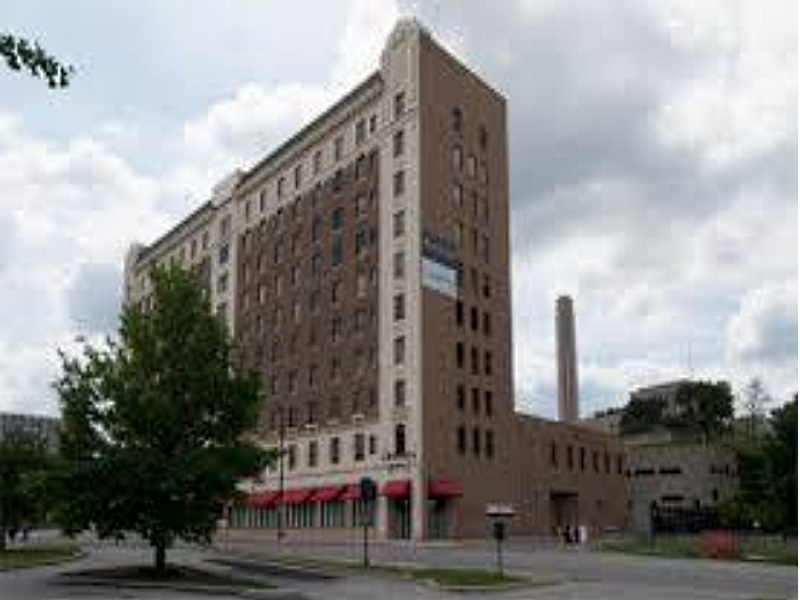
In 1892 it was recommended by the federal government that secondary education include 12 years of schooling, but decisions to follow the strategy was left to local authority. In New Iberia, Louisiana, my father finished high school after 11 years. So, at 17 years of age, he entered the work field, including my grandfather’s movie theater. One day in 1917, when he arrived home at the end of the day, Papa told him to pack his bags because he was going to automobile school. So it was that Daddy’s life-long career was established, as he enrolled at the Sweeney Automobile and Tractor School in Kansas City, Missouri, and made the trip by train soon after. The Sweeney school was established in 1908, and by1917 it boasted a new ten story building with private rooms, dining facility, gymnasium, and olympic size swimming pool. The eight week course had a tuition of $150, room and board was available for $56 for the eight weeks, and spending money of $1 per week was suggested.

Daddy opted for a boarding house in Kansas City. (I find it hard to imagine a time that one could live away from home for $25-$30 a month!) It was most fortunate that Daddy attended in 1917, because during the 1918 flu pandemic 2300 of the 3000 students caught the illness, resulting in 15 deaths between September 29th and October 4th!

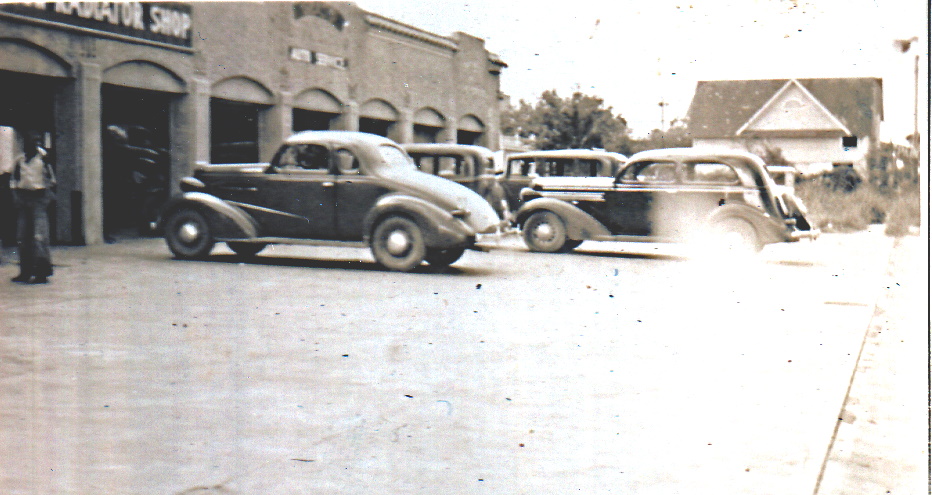
In 1918 Papa opened an automobile repair shop. I don’t know how long it remained open, because Daddy worked a couple of years for an automobile dealer in Beaumont. Around 1925 the dealer replaced much of their equipment, and Daddy made an offer to purchase a set of replaced ramps, tools, and associated equipment, and started his own repair business. He rented a stall with a full depth pit at Wasson Radiator Shop on the corner of McFadden and Willow streets in Beaumont. He would continue at that location until the late 1950’s.

Particularly In the early years, the front suspension, axles, axle springs, and steering linkages were not that sophisticated, most of the roads were unpaved, and even those that were paved could be rough. All of that combined made for fairly routine misalignment of the front wheels and damage to the various components, which allowed for a considerable amount of work for good mechanics. Daddy was very fastidious with everything that he did and always believed in providing excellent work for a reasonable price. That would make his business successful and develop a long list of loyal customers.

I spent many hours wandering around that shop and playing in the pit. There were all sorts of discarded parts, such as ball bearings, that could be used as toys. The smell of rubber, grease, and naphtha were common to Daddy’s work, and the odor of acid and blow torches from radiator repair is still embedded in my memory. Back then, radiators were often damaged by small stones or other debris thrown from the roadway and through the grill-work of the vehicles, causing leaks and bending the thin fins around the water tubing. The radiator was removed from the auto and repaired over a large water vat, where it could be submerged to locate air bubbles at the hole in the tubing. It was then lifted and the hole closed by dabbing hydrochloric acid on the area to clean and etch the tubing, then heating with an acetylene torch and applying solder. I would watch the workers for long periods of time. All of the men knew me and would carry on conversations about anything and everything, especially Roy Rogers and Gene Autry and their adventures. The owner of the shop was Dick Railey, who also lived near Vidor, and who also liked to tease me. I can still remember one day, when I was very young, standing near the office, arguing with him as to whether Roy Rogers wore his pants inside or outside his boots. Of course, any good fan of western movies knew that he wore them INSIDE!! And that’s how I wore mine!

There was a middle aged black man named Robert who worked at odd jobs for the radiator shop. He was always friendly and regularly joked around with the workers. He called me “Masser Albert”; not as in “his master”, but because I was young and hadn’t reached sufficient age to be called ”mister”. When my grandparents celebrated their 50th anniversary in 1947, they rented a service wagon with ice vats to dispense all the beer, wine, sodas, and other drinks. There were so many people in attendance that everything was set up in the front yard. Daddy hired Robert to act as “bartender” for the event, and he had the time of his life, serving drinks all of that day. I can recall that, even years later, Robert would comment about how much he enjoyed the day and remind Daddy that if we ever had another celebration, he sure would like to be bartender again!

Photos below of Sweeney Automotive and Tractor School – 1917 and Wasson Radiator Shop about 1940

Unknown's avatar

Possible Origin of the Nauck Family

So, a little change of subject today. I recently contacted my sister, Eleanor, to see if she had possession of any of our family photos. Providentially, she was in the process of sorting through a closet that held an archive of photos, papers, and mementos from our parents. At 89 years of age, she wanted to pass this trove on to someone for safe keeping and was ecstatic that I was willing to take them. So now I’m in the process of digitizing much of this to be included in this blog. As is the usual case, so many of the photos of people from eighty, ninety, even one hundred years ago are unidentified, leaving me to only wonder about them. There are better than a thousand photos to select from and I’m anxious to share some here.

Within that archive I found correspondence regarding another line of Naucks. As yet, I haven’t been able to find a link between our ancestors, but one letter was from a German immigrant, a William Nauck of Greenwich, Connecticut, who, at least, added some light to the origin of our name. Interestingly, he was an officer in the U.S. Army on assignment in Germany at the time he wrote the letter in 1983, during the unrest brought about by the Polish “Solidarity” movement which had caused a martial law state in Poland.

From his writing, it seems the Nauck name is essentially Slavic, originating from an ancient powerful tribe called Wend, which was practically annihilated during the wars between the Germans and Poles after 1200AD. Those who were able to escape settled into the mountain valleys in what would become northern Bohemia, where they lived undisturbed until the 1500’s, when they began moving north and east into Prussia, joining into the modern life of that time. Many of them settled in Pomerania where William’s family lived in Stettin, where they worked in the shipyards, building the wooden sailing ships that sailed the Baltic Sea. Many others settled around Berlin, just to the south of which, lies Finsterwalde, first noted in historical records around 1288. That is where our oldest known ancestor lived, in the late 1500’s, with his linage continuing there into the 1700’s. My original post contained information about that.

In researching these people groups, regions and places, the history of Europe becomes so very involved, somewhat confusing, and yet fascinating. Unrest, rebellion, and war have plagued the various societies on a regular basis from the beginning. Of course, that is true for most of the world, but Europe is of special interest since it is part of the history of our family.

Unknown's avatar

The logger was a tall black man who worked by himself.

The field on the other side of our house, the North side, had scattered trees of various sizes, some hardwood and some pine. Beyond our fence line was forest with large mature trees, including sixty to seventy foot tall yellow pines, and one summer the owner sold some of the timber. The logger was a tall black man who worked by himself. He wore overalls with no shirt, showing muscles like I had never seen, and the sun on his sweaty arms and shoulders made his skin shine. He had an old logging truck and a pair of huge mules that were much larger than our horses. They were paired with a big leather harness. He cut down those tall pines by hand with a long logging saw (chain saws hadn’t come along at that time}. After dropping a tree he would cut it into shorter lengths of maybe twenty feet, then attach a chain to the logs and connect it to the harness of the mules. They would then drag the log to the truck, lining it up with the side of the bed. His communication with those mules was fascinating! Simple one word commands moved them simultaneously with exactness. Detaching the chain from the log, he would attach another chain with hooks to each end of the log and, moving the mules to the opposite side of the truck, connect that chain to their harness, and they would then pull the log up onto the truck bed. It was such an amazing process to watch. Those mules were so powerful, and seemed to accomplish it almost effortlessly. At the end of the day, he would drive out with his logs and leave the mules in the woods overnight in a simple rope corral, with tubs of feed and water.

I visited the location for several days to watch tree after tree removed from the forest. During all of the time that I spent there, watching from a distance, neither he nor I ever spoke to one another. He knew I was there, but he never even made eye contact with me. I was quite young and very shy around people, and sadly, in those days, “colored people” didn’t usually start conversations with “white folk”. The old adage of “speak when you’re spoken to” was the rule for children and black people. At that age, I think that the only black person with whom I had ever enter-acted was a hired man where Daddy had his shop.

In fact, the town of Vidor, and the surrounding area had no population of color, and that was intentional. It was well known that black people were not allowed to live in Vidor, and it would be many, many years before that could change. The town lay across the Neches River from Beaumont, and had originally been populated mostly by hired laborers from the steel works, shipyards, and factories in the city. Many were poorly educated and carried racist tenets from decades before them. It doesn’t seem that long ago, but I so well remember the “colored” and “white” drinking fountains, restrooms, and even separate waiting rooms with individual entrances at clinics and doctors’ offices. It would turn out that my first actual relationships with people of color would be in the military!

Across the road from us, the forest extended for better than a mile to the East before the next road. As a young child my imagination conjured up all sorts of wild things that probably inhabited those woods! In that part of the state the forests contained lots of low areas that collected water and made good wallows for feral pigs that roamed throughout. There were a good number of these hogs that we would see routinely, in the ditches along the road and in the edge of the woods. We referred to them as “razor-backs” because some them had very large tusks. On occasion, they could be aggressive, so we always kept our distance when they were around.

There was a time when I happened onto several in our North pasture. I believe they were as startled as I was, but they weren’t as afraid I was! A fairly large boar started to trot in my direction and I immediately searched out a small pine tree with branches low enough for me to reach, and began frantically climbing. When I was well off the ground I stood on a branch hugging the tree trunk while “the hair on my neck stood out.” The whole bunch of them rooted around the area for what seemed like hours before they meandered out of sight. I dropped down from my perch and ran as fast as I could back to the house, all the time envisioning them right on my heels!! Times of fright such as that would make my ears feel strange, like they were pulling forward!

Unknown's avatar

I especially loved summertime; no shirt, no shoes, no school!

I never liked cold weather, so it’s not surprising that I especially loved summertime; no shirt, no shoes, no school! Getting hot and sweaty was no issue for me. Holding a water hose over my head or standing by a lawn sprinkler only added to the pleasure of being outside on long sunny days. I even enjoyed splashing through puddles on warm rainy days. The drainage ditches and road shoulders were an extension of our front lawn, so I wold spend hours wading in the water that collected in the ditch. It was a great place to search for and catch “crawdads”. Pieces of wood made boats for my “army men” to float around as I played war.

Most years Daddy would order a dump truck load of sand for filling holes and leveling areas of the lawns and planting shrubs. For a few weeks, until it was all used, it made a favorite play spot for making roads for my little plastic cars that came in boxes of cereal, or digging caves and building forts for my toy soldiers. Small sticks made great barricades and fence posts, and little boughs from trees or shrubs could be used as trees. I liked to set up up all my soldiers in foxholes, behind barricades, or behind mounds, and throw small clumps of sand at them like artillery shells. Using a set number of clumps to throw, I would see how many men I could knock over to determine whether or not I had won the battle! My imagination was the only limit to the hours of enjoyment that I spent on those piles of sand.

I learned from my brother, George, how to throw a tennis ball up onto the roof of the house and catch it when it rolled back off. One late afternoon, when I was six years old, I was playing this game when I threw one ball too hard, causing it to go over the ridge of the roof to the opposite side of the house. I quickly ran around the house to find it, and as I was walking through the lawn, surveying the shrub beds, I suddenly felt an extreme pain on the inside of my right foot. I jerked my foot up as I looked down, astonishment turning to panic as I saw a Ground Rattler coiled to strike again. I don’t know how high are how far I leaped, but I’m sure that I could have qualified for a college track team! Motivated by fear and adrenaline, I was able to hop, on one leg, around to the front of the house while holding my other foot in my hands, crying and screaming “snake, snake!!” I’m certain that God was orchestrating events because as I rounded the corner of the house, Daddy was pulling into the driveway, coming home from work. The whole family was alerted to the sound of my screams. Daddy jumped from the car, ran over and picked me up, looked at my foot, and carried me inside as he told Kurt to go look for the snake. He took me straight to the bathroom and set me on the edge of the bathtub. He grabbed a bottle of hydrogen peroxide and a fresh razor blade from the medicine cabinet, knelt down and took a swig of peroxide, swishing it around in his mouth, then spitting it on the floor. After pouring more peroxide on my foot, he made two “X” cuts across the fang marks on my foot. He then proceeded to chew and suck on my foot, spitting dark red blood on the floor. He continued until the cuts were bleeding bright red. Iodine and a bandage came next, causing additional pain that was probably worse than the bite! Kurt had come in to verify that he had found and killed a small Ground Rattler. I was placed in bed while Daddy called the local doctor, who affirmed the actions taken and prescribed rest and lots of fluids. If there was a good side to the experience, it was Daddy bringing home six-packs of “Grapette” soda for me. It took about two weeks for the swelling in my foot and ankle to subside, and I understood why Butch swelled so much after a bite. It was a profound experience for me, as my fear of snakes grew exponentially. I had held Garter snakes that George would catch on occasion, but I wanted nothing to do with any kind after that! Actually, my disdain for snakes continues to this day!

Another group of creatures that caused me fear were spiders; any type, any size, but the larger they were, the greater the chills down my spine. Grass spiders were bad enough, but the large yellow garden spiders would really make me cringe. So many times, as I made my way through the woods, I would suddenly find myself face to face with one of these huge spiders with it’s web stretched from the tree branches! I never got used to it.

One morning, as I was pulling up my jeans, a large grass spider that had spent the night inside them came running up the front of my t-shirt! I was immediately slapping at it, screaming and dancing a jig. Mother came running in from the kitchen, afraid that I had caught on fire from the gas heater, and she scolded me good for scaring her so badly. I wasn’t very sympathetic with her after the terror I had just experienced, but I was still alive, and I knew to keep my mouth shut!

Did I mention my “care-free” life around the farm?

Unknown's avatar

Adventures of early childhood on the farm.

By the time I was born, my sister, Eleanor Mae, was thirteen years old, my oldest brother, Kurt Rudolph Jr., was eleven, and my second brother, George Stanford, was six. So, being the youngest by far, and there being no other children within a mile of us, my pre-school years were spent at home alone with Mother. She was involved in an auto accident, along with Eleanor when she was a baby, which frightened her to the point that she decided not to drive any more. So, we didn’t leave home to go anywhere. At the time, I didn’t know anything else and I couldn’t have cared less. I spent my days enjoying my toys, our animals, and the care-free life around the farm.

We had a Rat Terrior dog named Butch; white with scattered black spots and a black “saddle” in her mid-back, a cropped tail, very intelligent, and always playful. She would follow me everywhere that I went, always on guard, and a terror with snakes! Occasionally, during the warm months, she would have a swollen jaw or side of her muzzle from a snakebite. Aside from the usual Garter snake, which loved all the shrubs around our house, and various harmless snakes, we always had Copperheads, Ground Rattlers, and an occasional Coral snake to watch out for. Butch was fierce with all of them. She was not afraid of anything, including gun shots, except for lightning, and although she was strictly an outdoor dog, when we had severe thunderstorms we would let her inside the house, where she would cuddle at our legs and shake!

One of my favorite adventures was to go out to the barn at night with Kurt and George and, of course, Butch. We would quietly enter the big milking room, then one of them would turn on a spotlight and shine it at the ridge of the barn roof where rats would often be hanging out. The other would use our 22 rifle with rat-shot shells to shoot them down. As soon as the rat hit the ground Butch was on it, shaking it fiercely from side to side. It was so funny to watch her and hear her growling as she finished it off.

She would chase armadillos to their holes in the ground, and sometimes try to dig them out. It was comical to see her butt in the air with dirt flying between her hind legs! When Mother and I went berry picking Butch was constantly in and out of the briar patch, which helped us not have to worry so much about snakes.

As I recall, she was with us for close to twenty years. She developed heart worms and passed away on the night of March 5,1953, the same day as Joseph Stalin. Mother and Daddy were out somewhere that evening and when they returned home, George told them that two dogs had died that day, one very bad and one very good.

Of course, we had multiple cats, and I have always been an avid cat lover. I spent many hours watching and playing with them in boxes and buckets. My favorite times were when we had a litter of kittens. They were usually born under the house and would hang out in the shrubs along the sides of the house, and were, of course, wild at first. I would sit very still on the door step with my legs straight out on the walkway and wait for them to wander out of hiding. After a while they would start chasing each other around and over my legs. It was difficult for me to not break out in laughter and scare them away. Eventually they would get used to me and begin to become tame.

We had two riding horses named Buster and Snips. Snips was younger and a bit flighty and liked to run. Buster was an exceptionally well trained and gentle horse which would tolerate all ages. As soon as I was old enough to keep myself in the saddle I would ride him at a walk around and around our driveway. Mother would actually leave me alone with him as I rode.

There was a day when George and I were riding out in the field next to Papa and Mama’s place when George decided to let Snips run. He rode bareback while I had to have a saddle so that I could hold onto the pommel horn since my feet didn’t reach the stirrups. As soon as George galloped away Buster took off at a run following them and I was panicked! I screamed at George to stop, to no avail. I just couldn’t handle the jolting of Buster’s body at that speed and I would start to slide off one side of the saddle, pull myself back up, then slide to the opposite side, back and forth, until I finally slipped completely off and hit the ground. Buster was so well trained that as soon as my weight left his back he came to an immediate halt. His rear hoof hit me in the lip, but that was the extent of my injuries. I was so mad at George that I screamed my curses at him through my tears!

That was not my only mishap riding. When I was around six or seven, I was riding Buster around the driveway when we passed too close to my tricycle. The handlebar caught in a saddle stirrup which spooked him, causing him to jolt and run until the tricycle came loose and he came to that sudden stop. Unfortunately, I didn’t stop with him and went sailing to the ground! Broken arm number one! I put my arms out break my fall and snapped one of the bones in my left forearm. Mother broke her driving ban to take me to the local clinic in Vidor, where I had my first X-ray. The doctor used a cloth of ether to put me to sleep. It would take some time to become accustomed to having a cast from my elbow to my hand. Probably the most aggravating part of the situation was not being able to scratch my arm or hand when they became itchy!

Our two milk cows were similar to the horses in nature. Beauty, a Jersey, was very docile and gentle, while the Guernsey, named Sissy, had a cantankerous side to her and could be pretty ornery when she had a mind to. While Beauty’s horns grew, typically, straight out from her skull, Sissy had horns that arced forward and back toward the center. That fact was significant in that one day I was in the barn while Kurt was preparing to milk them when Sissy decided to act up, by backing me up against the wall and sticking her horns into my ribs, one on each side. Fortunately, I had yelled at her and Kurt saw what was happening just in time to give her a heavy shove before she did major damage. She turned toward him, shaking her head antagonizingly, until he grabbed a piece of 2×4 and smacked her in the side of the head! I ended up with a couple of significant scrapes and some very sore ribs, but I learned to make certain that I had something to defend myself when Sissy was in the barn.

A nasty cow wasn’t my only nemesis. Along with the chickens, there was a time when we had two large White Leghorn roosters that thought they ruled the barnyard. They would often approach us with their wings spread and their heads erect, cackling and acting intimidating. They were very apt to peck us if we weren’t watching. Once again, when I was in the barn with Kurt one of them decided to show me who “ruled the roost” by stalking me back against the wall, then spreading his wings and jumping up to peck me on the chin. Astonished, I yelled out as he did the same thing again. Then, as though out of nowhere, Kurt flashed into view and landed a swift kick to that rooster, launching it all the way against an adjacent wall, leaving a trail of feathers. I don’t recall if the bird survived, but Kurt, it seemed, was my guardian angel when I was very young.

Unknown's avatar

Probably there are few people that have never thought about “what if” concerning their past, or that of their ancestors.

I always thought it interesting that my Dad was born in New Iberia, Louisiana and my Mother was born fifteen miles down the road in Abbeville, and that they both ended up in the Beaumont, Texas area just a few years apart. Mother never talked much about her family; her mother had died when she was eight years old and her dad was killed in an accident in 1930, the same year she married Daddy. I don’t know if she was unaware of much of her linage or just didn’t wish to share it. I, of course, knew that Mother was Cajun and I was aware of the Cajun history back to Acadia, Canada and France. As a child I would listen to Mother and her aunt Eula Boudreaux speak in Cajun french dialect. I always figured that they spoke that way when the subject matter wasn’t for my ears to hear.

I never thought that much about Mother’s ancestry until a few years ago when I found out about the Nauck history, which piqued my interest in exploring my maternal history. I reached out to some cousins in Louisiana with no success. The name Boudreaux is as common in Louisiana as Jones or Smith anywhere else! I finally tried entering her name online at FamilySearch.Org, and got no immediate response. Then, three years later I got an e-mail from Family Search stating they had found a link. When I checked their site I couldn’t believe that they had a family tree going back to the 1500’s!! I was amazed, and although I don’t know anything about anyone in that tree, at least I have the names and locations.

Our family goes back to my 12th great-grandfather Mathurin Boudrot, born in 1540, somewhere in France.

My 10th great-grandfather, Pierre Martin Boudrot, 1580-1643, is the last in the tree located in France at Cougnes, LaRochelle.

Great-grandfather number 9, Michel Boudrot, 1601-1686, is the first listed in Acadie, Nouvelle-France, in Nova Scotia.

Jean Boudrot, born in 1740, was my 6th great-grandfather and was among those expelled from Acadia by the British during the Great Upheaval or the Expulsion, as it was known in Britain, lasting from 1755 to 1763. Many were sent back to France, and in 1785, approximately 1600 of these Acadians immigrated to Louisiana. Over a six month period, seven ships were commissioned to carry them back, one of them being the Le Saint-Remi, which carried Jean Boudrot and his family.

My 5th great-grandfather, Jean Charles Boudreaux, 1762-1807, was the first to bear the new sur-name. I don’t know why the end of the name was changed. There were families named Comeaux and Thibedeaux among the Acadians. Perhaps the inter-marriage among families may have occasioned the change. Maybe further research will provide an answer.

Probably there are few people that have never thought about “what if” concerning their past, or that of their ancestors. I know that I have done so, more than once. But after learning of both sides of my family, I’m truly amazed. If not for the great suffering of the Acadians and the determination of many of them to escape France a second time for a future in the new world, my maternal ancestors would have never ended up in Louisiana. And, if not for the independent, if not rebellious, nature of my great-grandfather, Kurt Nauck, to leave behind his heritage in Germany and sail the seas, leading him to Louisiana, my Nauck lineage would not exist. And even so, how close he and his family came to being wiped out in the hurricane of 1879!

The Acadian and Cajun histories are fascinating, as well as sad, and I intend to write about them later on.