Unknown's avatar

We always had 55 gallon barrels

We always had 55 gallon barrels around the farm, to store cattle and poultry feed, or water, and for assorted other purposes. They were also handy to use as play horses and balancing on as we “walked” on them around the yard. Kittens would play in them, as well. Car and truck tire inner tubes were also abundant. We would use them for play horses, stack them to hide inside, or just roll them around the yard. Of course, they were especially useful for floating around in a lake or the river, and particularly fun at the beach.

About three miles from our house was a long drainage channel that ran from miles inland to Sabine Lake, which connected to the Gulf of Mexico at Sabine Pass. There was a long section of it that was a raised timber and steel waterway that paralleled Highway 90, just before it crossed under the road. We referred to that section as the “flume”. Daddy, Kurt, George, and I would occasionally take some tubes to the flume and drift along on the slow current. I found it to be a fascinating, if not eerie, place, with the metal half-pipe walls and wooden beams overhead. It would have been too frightening to me without family close by.

Although we could drive about thirty miles to the Gulf from where we lived, the best beaches were about an hour or more away. On occasion, we would make the hour and a half trip to Galveston, where we could visit Uncle Archie, Mother’s brother, who ran a hotel there, and spend time along that busy beach. I loved going to Galveston because of the long automobile ferry ride that crossed the bay, from the mainland to the island. Being able to get out of the car and stand along the rails of the ferry, with the wind whipping my hair, and watching the seabirds and looking for dolphins or sharks or anything mysterious, was mesmerizing for me.

More frequently, we made day trips to McFadden beach near Port Arthur and the Bolivar peninsula, which was East of Galveston. Those sections of beach were sparsely populated and far less crowded. We would take our pickup truck with Mother and Daddy in the cab with the food, and us kids, the inner tubes, and other paraphernalia in the back. It was such fun riding in the warm early morning, with the wind whipping around, and having a great view of all the surroundings. After we made the turn at Winnie-Stowell and headed toward High Island, the familiar smell of the marshes and the gulf would become evident. At the next turn, my excitement would begin to build, because the road from then on paralleled the beach, and I could look out over the water and see the breakers crashing, sending their foam up onto the sand. It would seem to take forever before we would turn off the road and onto the beach to start a day of joy. There were no boogie boards or surfboards back then, but inner tubes made for great fun, riding the waves to the shore. After a day of sun and sand, as darkness started to settle in, we would load up for the last part that I loved so much. We would gather in the truck bed, right behind the cab, where the wind was the least, and cover up with a blanket for the chilly ride home. It was almost magical, feeling the warmth of the blanket, with the cool air in my face, the darkness surrounding us, and the starry sky overhead, remembering the good time we had experienced. It actually made me sad when we finally pulled into our driveway, knowing that the day was over.

Although I had three siblings, I was the youngest by six years, so everyone had considerably different interests than me, and they were all in school by the time that I was more than a toddler, and I was on my own for entertainment during the day. I tagged along with Kurt or George as much as possible, as they did chores or maybe something fun. Since Kurt was eleven years older than me, I spent a lot more time with, and learned much from, George, who was artistic, mechanically inclined, and always exploring or creating things. I observed and attempted to copy most everything that he did, except tinker with automobiles, which just didn’t interest me.

After he showed me how to burn holes in paper using a magnifying glass in the sun, I would spend hours searching out ant mounds, and focusing the sun ray on the unsuspecting ants. It would instantly fry them, and I would pretend that I was an army sniper picking off the enemy, one by one.

He always seemed to have a stash of left-over fire-crackers from New Years or Fourth of July, and we would light one and stick it in one of those ant mounds, or drop one down craw-dad holes, or build a toy soldier fort in the sand pile and blow it up, or put a “cherry-bomb” under an empty tin can and see how high into the air it would fly!

One year, during the fall, he decided to try to trap flying squirrels. He built a wooden box with a hinged lid that was held open with a string tied around half a pecan. Since flying squirrels are largely nocturnal, about dusk, he would go out in the woods behind our house and set the trap at the base of a large limb of an oak tree and rub pecan around the trunk and the limb. Just after daybreak the next morning he would go out to check the trap. If it was closed, there should be a squirrel inside, in which case he would remove the trap and bring it back to the house, where he would take it into the bathroom and set it in the bath tub. Putting on heavy leather work gloves, he would slowly open the lid and immediately the little furry animal would shoot out and begin running all around the bottom of the tub, and trying to climb the sides. Of course, the tub walls were too slick for it to manage escape. The next move was to eventually chase it into a corner of the tub and cover it with his hands, and then scoop it up and get a grasp of it’s body with just it’s head exposed, biting feverishly at the glove. Then removing the other glove, he would begin stroking it’s head with a finger. In a matter of just a few minutes it would start to calm down, and he would hold a piece of pecan for it to nibble. Within less than thirty minutes he could actually hold it in his hand, and tie a length of cotton string around it’s neck. He would then place the squirrel in his shirt pocket with a Kleenex tissue and more pecan. At that point, it was basically tame, and since it spent most of the day sleeping, it was easy to carry to school with him. The issue then was where to keep it, so he made a cage out of hardware cloth. Newspaper was torn into small pieces and placed inside for it to make a nest. A jar lid for water, and a supply of nuts, made for a suitable home. Later on, he fashioned a little exercise wheel for it run in. Over a few weeks, he was successful at capturing a couple more, adding to our squirrel family. It was amazing how quickly they became docile, so that they could be held, and carried around in our shirt pockets, the only evidence being the string tied to a shirt button, the lump, and an occasional yellow spot at the bottom of the pocket! If they became active during the day, they would usually find their way inside our shirt and crawl around, tickling us with their tiny claws through our t-shirt. Word later got out that we had them, and people would contact us wanting to buy one. We sold them at five dollars for a wild one and ten dollars if tamed! Years later, I would do some trapping myself.
Unknown's avatar

In 1892 it was recommended by the federal government

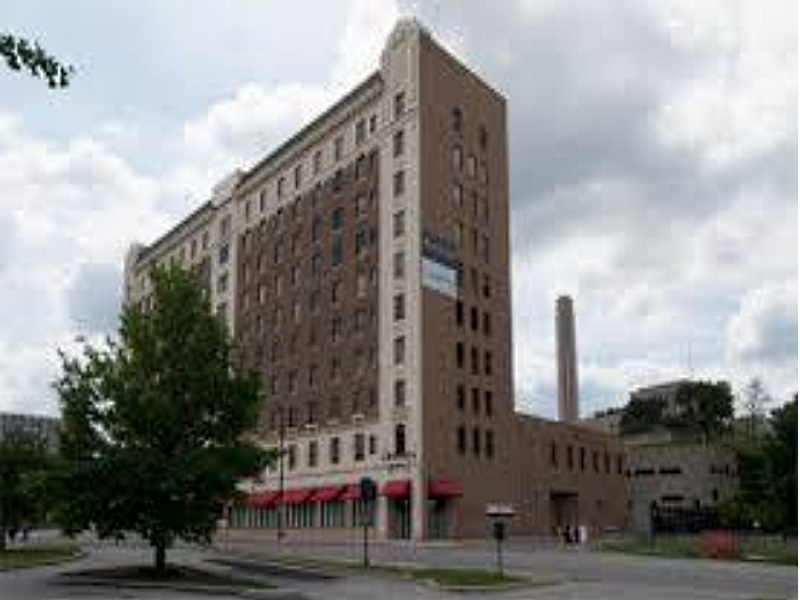
In 1892 it was recommended by the federal government that secondary education include 12 years of schooling, but decisions to follow the strategy was left to local authority. In New Iberia, Louisiana, my father finished high school after 11 years. So, at 17 years of age, he entered the work field, including my grandfather’s movie theater. One day in 1917, when he arrived home at the end of the day, Papa told him to pack his bags because he was going to automobile school. So it was that Daddy’s life-long career was established, as he enrolled at the Sweeney Automobile and Tractor School in Kansas City, Missouri, and made the trip by train soon after. The Sweeney school was established in 1908, and by1917 it boasted a new ten story building with private rooms, dining facility, gymnasium, and olympic size swimming pool. The eight week course had a tuition of $150, room and board was available for $56 for the eight weeks, and spending money of $1 per week was suggested.

Daddy opted for a boarding house in Kansas City. (I find it hard to imagine a time that one could live away from home for $25-$30 a month!) It was most fortunate that Daddy attended in 1917, because during the 1918 flu pandemic 2300 of the 3000 students caught the illness, resulting in 15 deaths between September 29th and October 4th!

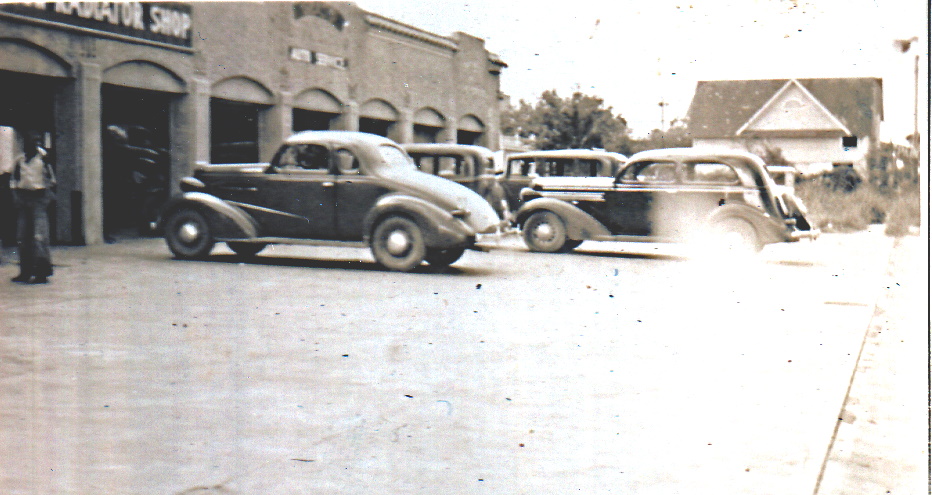
In 1918 Papa opened an automobile repair shop. I don’t know how long it remained open, because Daddy worked a couple of years for an automobile dealer in Beaumont. Around 1925 the dealer replaced much of their equipment, and Daddy made an offer to purchase a set of replaced ramps, tools, and associated equipment, and started his own repair business. He rented a stall with a full depth pit at Wasson Radiator Shop on the corner of McFadden and Willow streets in Beaumont. He would continue at that location until the late 1950’s.

Particularly In the early years, the front suspension, axles, axle springs, and steering linkages were not that sophisticated, most of the roads were unpaved, and even those that were paved could be rough. All of that combined made for fairly routine misalignment of the front wheels and damage to the various components, which allowed for a considerable amount of work for good mechanics. Daddy was very fastidious with everything that he did and always believed in providing excellent work for a reasonable price. That would make his business successful and develop a long list of loyal customers.

I spent many hours wandering around that shop and playing in the pit. There were all sorts of discarded parts, such as ball bearings, that could be used as toys. The smell of rubber, grease, and naphtha were common to Daddy’s work, and the odor of acid and blow torches from radiator repair is still embedded in my memory. Back then, radiators were often damaged by small stones or other debris thrown from the roadway and through the grill-work of the vehicles, causing leaks and bending the thin fins around the water tubing. The radiator was removed from the auto and repaired over a large water vat, where it could be submerged to locate air bubbles at the hole in the tubing. It was then lifted and the hole closed by dabbing hydrochloric acid on the area to clean and etch the tubing, then heating with an acetylene torch and applying solder. I would watch the workers for long periods of time. All of the men knew me and would carry on conversations about anything and everything, especially Roy Rogers and Gene Autry and their adventures. The owner of the shop was Dick Railey, who also lived near Vidor, and who also liked to tease me. I can still remember one day, when I was very young, standing near the office, arguing with him as to whether Roy Rogers wore his pants inside or outside his boots. Of course, any good fan of western movies knew that he wore them INSIDE!! And that’s how I wore mine!

There was a middle aged black man named Robert who worked at odd jobs for the radiator shop. He was always friendly and regularly joked around with the workers. He called me “Masser Albert”; not as in “his master”, but because I was young and hadn’t reached sufficient age to be called ”mister”. When my grandparents celebrated their 50th anniversary in 1947, they rented a service wagon with ice vats to dispense all the beer, wine, sodas, and other drinks. There were so many people in attendance that everything was set up in the front yard. Daddy hired Robert to act as “bartender” for the event, and he had the time of his life, serving drinks all of that day. I can recall that, even years later, Robert would comment about how much he enjoyed the day and remind Daddy that if we ever had another celebration, he sure would like to be bartender again!

Photos below of Sweeney Automotive and Tractor School – 1917 and Wasson Radiator Shop about 1940

Unknown's avatar

Possible Origin of the Nauck Family

So, a little change of subject today. I recently contacted my sister, Eleanor, to see if she had possession of any of our family photos. Providentially, she was in the process of sorting through a closet that held an archive of photos, papers, and mementos from our parents. At 89 years of age, she wanted to pass this trove on to someone for safe keeping and was ecstatic that I was willing to take them. So now I’m in the process of digitizing much of this to be included in this blog. As is the usual case, so many of the photos of people from eighty, ninety, even one hundred years ago are unidentified, leaving me to only wonder about them. There are better than a thousand photos to select from and I’m anxious to share some here.

Within that archive I found correspondence regarding another line of Naucks. As yet, I haven’t been able to find a link between our ancestors, but one letter was from a German immigrant, a William Nauck of Greenwich, Connecticut, who, at least, added some light to the origin of our name. Interestingly, he was an officer in the U.S. Army on assignment in Germany at the time he wrote the letter in 1983, during the unrest brought about by the Polish “Solidarity” movement which had caused a martial law state in Poland.

From his writing, it seems the Nauck name is essentially Slavic, originating from an ancient powerful tribe called Wend, which was practically annihilated during the wars between the Germans and Poles after 1200AD. Those who were able to escape settled into the mountain valleys in what would become northern Bohemia, where they lived undisturbed until the 1500’s, when they began moving north and east into Prussia, joining into the modern life of that time. Many of them settled in Pomerania where William’s family lived in Stettin, where they worked in the shipyards, building the wooden sailing ships that sailed the Baltic Sea. Many others settled around Berlin, just to the south of which, lies Finsterwalde, first noted in historical records around 1288. That is where our oldest known ancestor lived, in the late 1500’s, with his linage continuing there into the 1700’s. My original post contained information about that.

In researching these people groups, regions and places, the history of Europe becomes so very involved, somewhat confusing, and yet fascinating. Unrest, rebellion, and war have plagued the various societies on a regular basis from the beginning. Of course, that is true for most of the world, but Europe is of special interest since it is part of the history of our family.