Unknown's avatar

Its really hard to believe that it’s been almost eight years since I developed this blog and haven’t added to it since then! That certainly wasn’t my intent. I suppose that just confirms how “busy” we can allow ourselves to become. Well, I’m eight years closer to Heaven now, and I’m a bit behind in my plan to leave my story for posterity.

Aside from having so many other things to do, I got a bit hung up with concerns about managing all my thoughts in a chronological order. But, more recently, I realized that a blog is actually a collection of thoughts, not a biography! So, it really won’t matter if I bounce around through my history. The important thing is to collect as many remembrances as possible for the reader to peruse. So, with that in mind, I’m going to use these cold winter days to make a concerted effort to continue telling my story.

In my original post from January 2013, I summarized the family history from the 1600’s up to the early 1900’s. Now I want to look back at my immediate family.

Some time during the 1920’s my Dad purchased 20 of the 42 acres that my Grandfather owned in order to build his own homestead. He, himself, built a three room house consisting of a kitchen, bath, and bedroom with a covered porch on the rear that extended from end to end. That porch would later be enclosed to make a long living room. “Daddy” married “Mother” in 1930, and they began the process of developing what would be a garden place completely surrounded with wide beds of shrubbery of all kinds and large areas of lawn. Several large oaks grew on three sides of the house and created a canopy that nearly covered the whole structure. A long tear-drop shaped driveway extended from the front gate back to the house, around a huge oak tree, and back out to the gate. I would spend many hours riding one of our horses around that circuit, as did my siblings. Our location was well out from town with our nearest neighbors being one mile to the north and ta half mile to the south. Heavy southern forest surrounded us. Behind our house was our barn, with a milking room, stalls, feed room, and chicken room. We had Jersey and Guernsey milk cows, an occasional bull, calves, horses, goats, chickens, ducks, and rabbits. My oldest brother, Kurt, was in FFA in high school and started raising pigs as a project. It seems that pigs multiply like rabbits, because it wasn’t long before we had quite a few of them in a large fenced area in the woods behind the barn. Other than the horses, most of the livestock was for our consumption and occasional sale. It was fun and, often, educational growing up on a farm. It was only as I became older, with responsibilities of milking, feeding, and other chores, that the fun became work.

A large grassy field separated our home from my grandparent’s, which was located well back from the road, with a long gravel driveway running back to the house. Our horses and cows kept it grazed short. I would make many trips across that field to spend time with “Mama an Papa”, as they were known by all the families. I had a special bond with Papa since I was the “baby” of our family and was born on his 70th birthday. Behind their house was a barn that held a 1912 flat-bed log truck and a 1917 sedan. I don’t remember the make of them, but I remember how mystical they seemed to me, with their wood-spoked wheels and rusty bodies. They remained there until the termite infested barn eventually collapsed onto them. Papa, as well as my Dad, never wanted to get rid of anything with sentimental value. Along with the barn were two long, elevated turkey houses, a poultry processing shed, and a brooding shed with incubators and heated runs for baby chicks. Papa had developed a commercial poultry business many years before I was born, and as a young boy our family would, at times, spend all day helping to process chickens and turkeys.

Our property was located on US Route 90, five miles East of Vidor, Texas, about twenty miles from Louisiana and roughly fifteen miles, “as the crow flies”, from Sabine Lake which connects to the Gulf of Mexico. US 90 was the main route across the south, extending from Jacksonville, Florida to San Diego, California. It would be replaced by Interstate 10 in the 1950’s. Highway 90, as we called it, was a two lane concrete roadway with no paved shoulders. It’s hard to imagine that, as a child, that “major” highway had very little traffic. We could take walks or ride bicycles on the road and seldom have to move off into the grass for vehicles to pass. I was born in 1944, a year before the end of World War II. I can remember, as a young child, sitting on our gate with Mother, watching Army convoys passing by. Seaports in Florida and New Orleans were major ports for the return of soldiers from the European theater and they traveled this road to get to forts throughout the south and west. These convoys would sometimes number hundreds of vehicles carrying troops, tanks, artillery pieces, and equipment. Also tanker trucks, jeeps by the dozens, and airplane bodies with the wings removed. We would wave our arms and our American flags as they passed by, and they would wave back and honk their horns to us. It was almost magical for a very young boy, and it was something to which I looked forward with great anticipation.
Unknown's avatar

Nauck Family

Where did that come from?”… How many times our children have asked that question when Linda or I would repeat an expressive phrase that was familiar to our own childhood. “Katie bar the door”, “Raining blue dogs”, “That’s how the cow ate the cabbage”…..Obviously, such sayings were no longer a part of the times in which we found ourselves. History lost, if not for our memories of times gone by. And so it is with much of family history; small, or large, amounts of the knowledge of our fore-bearers lost forever with the passing of each generation.

My grandfather and my dad related lots of stories, many of which I no longer remember. I have promised my children that one day I would write down my memories so that they would have knowledge that can’t be forgotten. Since I hate writing longhand, I thank God for this technology which allows me to tell my story. Now, I pray He gives me the time to finish it all.

I will begin with a brief summary of what is currently known about the Nauck history. The Nauck’s are of German descent, a small family, even in Germany. So little is known of our heritage, because so little was written down and much of that lost to war over several centuries. And so many of the stories that were verbalized have been forgotten, or details skewed, by the passing of time and memory. Additionally, so many public records were destroyed in the first and second World Wars. In 1954, one of my aunts, Nona Nauck Hollis, enlisted the aid of her congressman to search for information as to our lineage back to Germany. My great-grandfather had immigrated to the United States, so we had very limited history in America, and nothing was known before him. She was successful in tracing back one additional generation in Germany, with very limited information, into the early 1800’s, to my great-great-grandfather of Berlin.

Thanks to Facebook, I was united with a “third-cousin” in Germany, whose mother was in possession of many old documents that have taken us much farther back in time. My thanks to Johannes Nauck of Stuttgart, for his desire to search for extended family in America, and for sharing information that extends our family tree back another six generations.

It is my hope that additional information may surface, but as of now, my lineage appears as follows:

Hans Georg Nauck, my 8th-great-grandfather, was deceased in 1621.

Johann Georg Nauck, my 7th-great-grandfather, served as town mayor, and was deceased in 1679.

My 6th-great-grandfather, Johann Christoph Nauck, 10/5/1658-1/26/1695, lived in Finsterwalde, in Lower Lusatia, where he was a municipal judge. He was displaced by the burning of Finsterwalde by imperial troops during wartime.

Johann Georg Nauck, 1690-1762, was my 5th-great-grandfather. He was a draper, apparently a retailer or distributor of cloth. As noted in one roughly translated document, he was Polish royal and princely chur-Saxon customs control. I’m not certain of just what that meant, but he was a wealthy man until the second “thirty years war” destroyed his properties and he fell into poverty, becoming a common soldier of Saxon dragoons.

My 4th-great-grandfather, John Abraham Nauck, was born to Johann on December 9, 1719 and died June 18, 1781. He served as a common dragoon and lost his left arm to a Prussian bullet. Because he could write well, he was not put out of the army, but was promoted to corporal and placed in command of Saxon cavalry horses of the Prince Sonderhausischen Regiment in Grasung. There he met his wife and had several children. He eventually took charge of an orphanage and apparently ran it until his death.

Johann Gottfried Karl Nauck 9/28/1764 – 2/15/1835, a son of John Abraham Nauck, was my 3rd-great-grandfather. He served as an apprentice in the orphanage bookstore. This may have been the beginning of a lengthy profession of book-selling and publishing that appears in scattered records of several generations that followed in Germany.

Ernst Sal Ludwig Albert Nauck 10/25/1815 – 1895, my 2nd-great-grandfather, was the owner of Albert Nauck and Company, a publishing firm in Berlin.

My great-grandfather is somewhat mysterious. According to my Aunt Nonie (Nona Hollis), Kurt Richard Nauck, 9/20/1844 – 11/2/1879, was a civil engineer in government service in Berwick and Morgan City, Louisiana, when a storm destroyed their home, and walking through the debris he stepped on a nail, resulting in lockjaw and death in 1880. His widow took their two children to New Orleans, where they lived until they moved to New Iberia, LA in 1897. However, Kurt Albert Georg Oskar Nauck 9/20/1844 – 11/2/1879, is remembered in a lengthy excerpt from German records; to wit, Kurt led a short but eventful life, full discomfort, deprivation and anxiety and poor in friends. He was fascinated by the profession of seaman as a child, and as a young man served briefly as an apprentice in banking before his father gave him permission to try sailing. After a short stint, he begrudgingly became an apprentice in a commercial business. In 1867 he went to England and once more fell in love with the sea. He served as a merchant seaman, sailing to Australia, the south seas, India, then to New Orleans, and Havana, returning to New Orleans and up the Red River into Texas. He went back to Germany for a while before returning to Natchez, Mississippi where he taught in the “Measure field”. He later worked as a surveyor in Brashear, then in Morgan City on the Atchafalaya, near the coast of the Gulf of Mexico. He married and had three children, establishing a farm, and owning a small freight vessel. He developed “modest prosperity” until the Hurricane of September 1879 destroyed towns, ships, and properties along the Atchafalaya. He and his family barely escaped the flood surge, losing everything they possessed. With all communication and transportation destroyed, help did not arrive for weeks. In the meantime, Kurt stepped on a nail while salvaging wood for shelter. Without medical aid, his wound became serious, and when help finally arrived he was transported by steamer to New Orleans where he died without seeing his wife and children again.

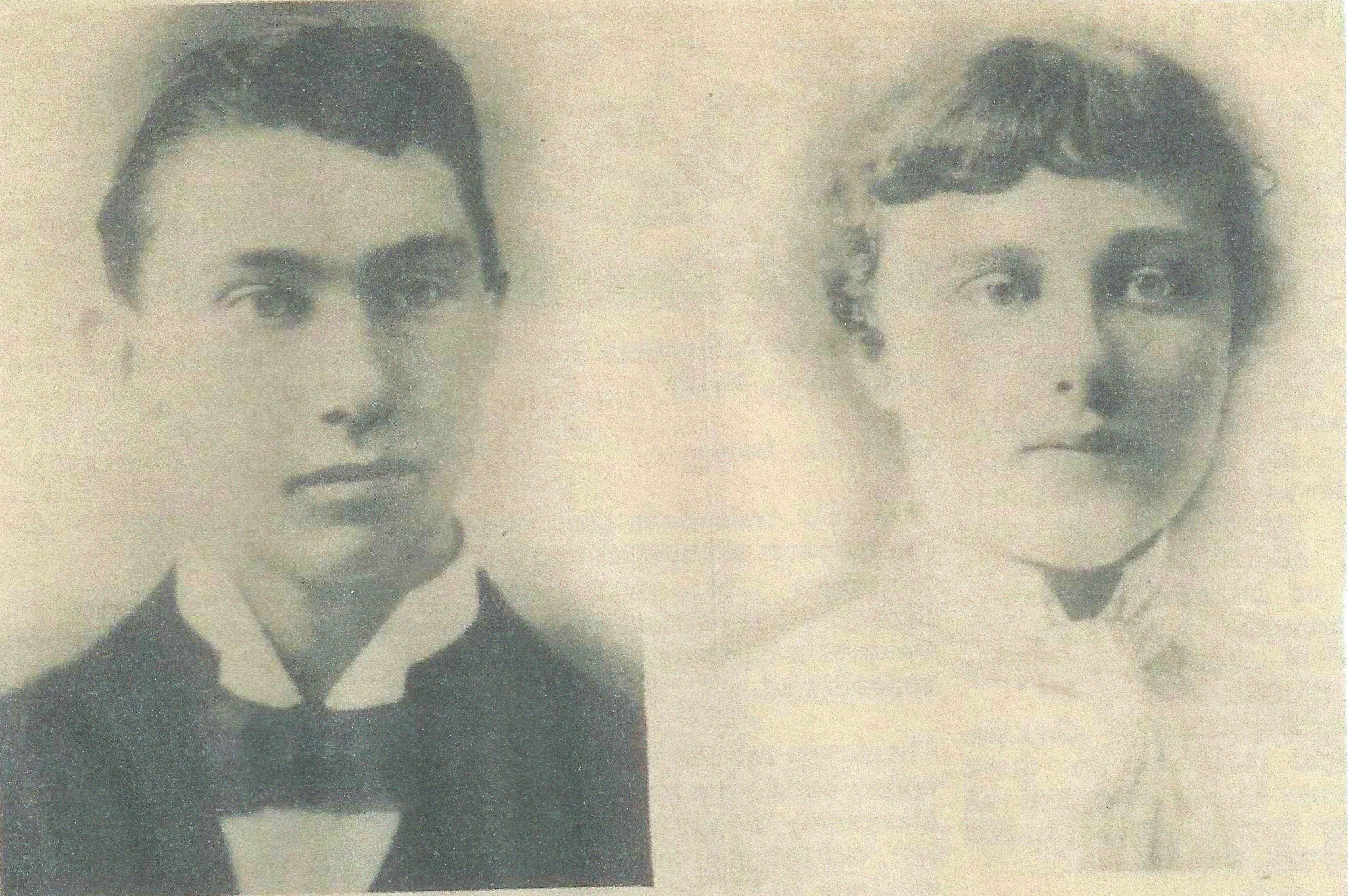
Albert George Nauck, October 7, 1874 – 1966, the oldest son of Kurt Nauck, was my grandfather, known affectionately by my family as Papa Nauck. He studied electricity and became a Master Electrician in New Orleans. Returning to New Iberia, he married Hulda Frenzel in 1897, and opened a grocery store. He later built and operated the first electric power plant in New Iberia and in Abbeville, installing the first street lights in both towns. His penchant for electricity led him to display “magic lantern” slides in a tent, then in a building. This evolved into “flickers” and later into “moving pictures” during the era of silent movies. (My dad remembered running the hand-cranked reel projector.) Papa and Mama had five children; Albert George Jr (1898), Kurt Rudolph (1899), Frenzel Howard (1901), Gertrude Hulda (1904), and Iona Amelia (1906). In 1916, he sent Kurt to the Sweeney Automobile School in Kansas City, where he learned “front end mechanics”. Papa opened the first modern automotive repair shop in Abbeville. With the outbreak of World War I, he moved his family to Beaumont, Texas in 1918, where he again worked as a master electrician, wiring warships at the Pennsylvania Shipyards. Shortly thereafter, he purchased 42 acres of land with a house and barns for $4000, and the family moved there. After the war Papa began a business raising and selling turkeys and chickens.